What You Really Need for Northern Spain – and What You Don’t
A surf trip to the Atlantic coast around Valdoviño (Ferrolterra) differs in several key aspects from classic surf destinations in southern Spain or Portugal. Atlantic swells, changing weather conditions and extended time in the water place different demands on equipment and preparation.
This packing list is aimed at intermediate and advanced surfers who want to realistically assess what they actually need for a surf trip to northern Spain – based on practical experience since 2019.

Why Galicia Requires a Different Kind of Preparation
Galicia is often referred to as “green Spain”. Many people automatically associate this with rain and unstable weather. In reality, the picture is far more nuanced.
The coastline lies directly on the Atlantic Ocean, benefits from consistent swells and offers a mild, non-overheated climate, which is especially pleasant for longer surf sessions.
Due to Spain’s north-western location, the sun sets noticeably later here than in Central Europe. During the summer months, evening sessions until around 10:30–11:00 pm are not uncommon, and even in spring and autumn, long days allow for a high degree of flexibility (and a lot of surfing).
Another advantage is the large number of differently oriented bays, which helps balance wind and swell directions more effectively than on exposed coastlines. Even when conditions don’t look perfect at first glance, it’s often possible to find a workable surf option.
Galicia Weather: Reality Instead of Preconceptions
Summer: Warm, but Not Overheated
During the summer months, air temperatures typically range between 20 and 25 °C (summer average). Many surfers consider this range ideal: warm enough for relaxed days at the beach, but without the extreme heat found further south, which can quickly become exhausting during sessions.
Sun & UV Exposure
Galicia records over 2,000 hours of sunshine per year (climate average). Due to wind and moderate air temperatures, UV exposure is often underestimated – especially while surfing. Reliable sun protection is therefore not a luxury, but essential.
Understanding Rainfall Properly
Most rainfall occurs during the winter months. In summer, rain is significantly less frequent and usually limited to short showers. Despite the lush green landscape, many surfers experience the summers here as surprisingly dry and stable.
Atlantic Influence & Forecasts
The proximity to the open ocean and the hilly inland terrain lead to variable weather patterns. Forecast models tend to react conservatively, which is why rain probabilities in weather apps often appear higher than what actually happens.
Why Many Surfers Underestimate Galicia
Galicia is not a classic postcard destination – and that is exactly what makes it appealing.
The landscape is rugged, green and largely untouched. Hills and mountains meet the sea, small villages shape the coastline and mass tourism plays little role. Many guests report after their stay that the area is far more beautiful and diverse than they had expected.
Another aspect is water quality. At the beaches around Valdoviño, the water is often exceptionally clear and blue, especially during stable summer conditions. This clearly sets the water quality apart from the typical image of an Atlantic coastline.
The fact that Layback is not a party camp, but deliberately focuses on small groups, calm surroundings and surf-centred coaching, fits naturally into this environment.
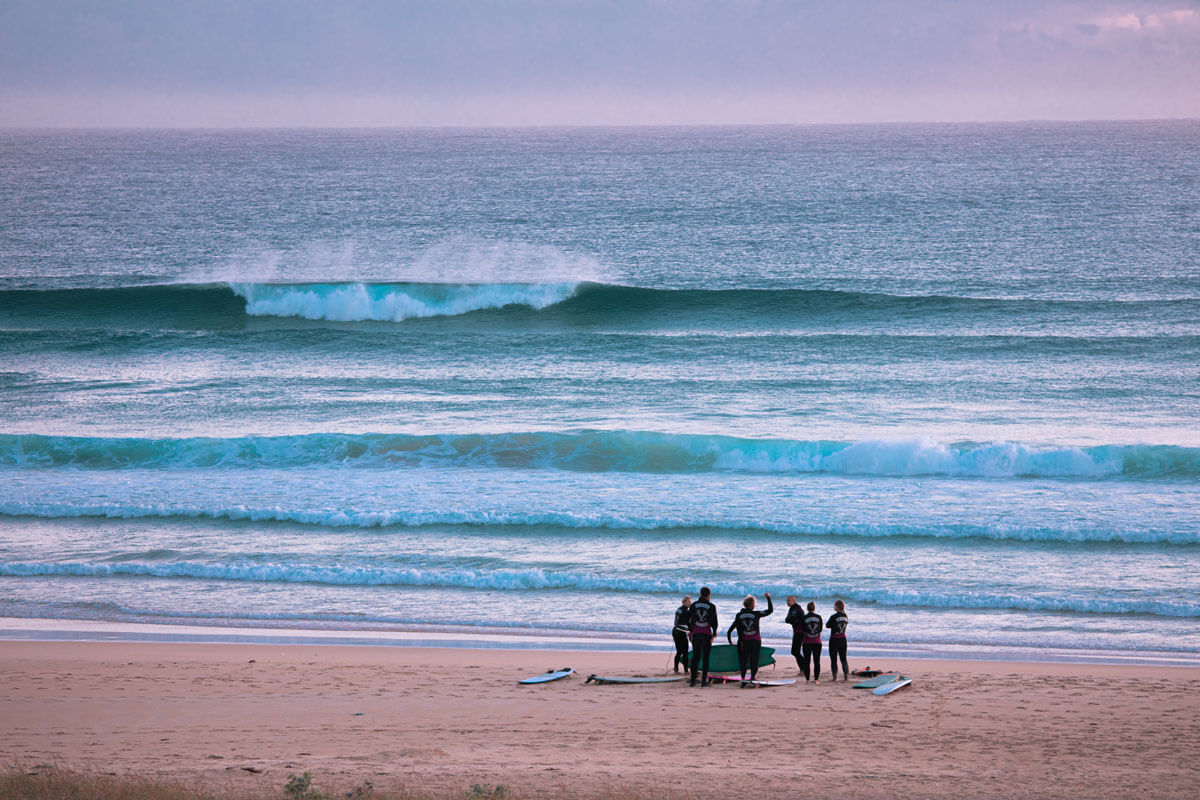
The Most Important Item on the Packing List: The Right Wetsuit
For surfers, wetsuit choice is crucial – it directly affects session length, concentration and overall progress in the water.
Which Wetsuit Do You Really Need?
Summer (June – September)
- 4/3 mm wetsuit:
Most surfers feel noticeably more comfortable in a 4/3 mm over time, especially during extended sessions or on windier days.
Spring & Autumn (April/May & October)
- 5/3 mm wetsuit recommended:
Allows for comfortable water time even during longer sessions.
Booties & Hood
- Usually not needed during summer
- Useful during spring and autumn to avoid cooling down
- Make a clear difference when spending a lot of time in the water
👉 Wetsuit takeaway:
Slightly too warm is better than too cold. Once you start freezing, sessions get shorter, focus drops and surfing quality suffers.
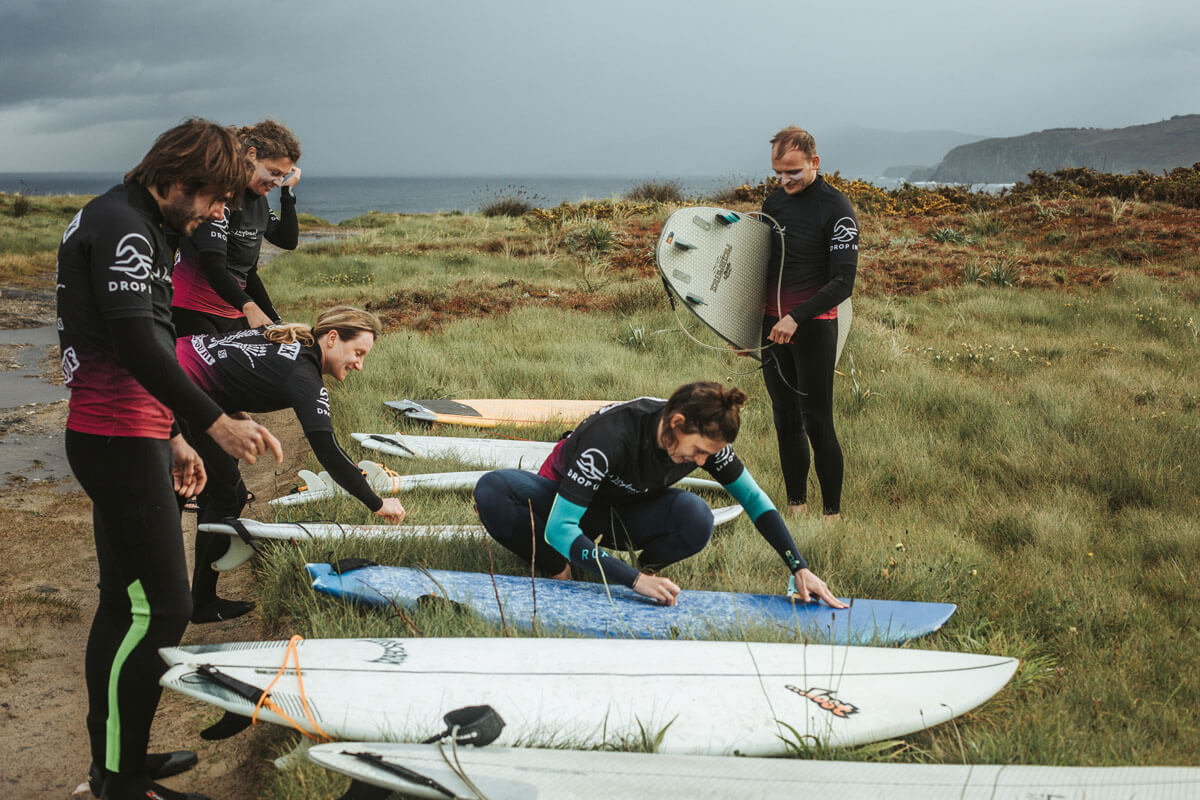
The Compact Packing List – Quick Check
Surf Essentials (Must-Have)
- Wetsuit suited to the season
- Zinc sunscreen (SPF 50+)
- Surf poncho
- Reusable water bottle
Optional, but useful
- Earplugs (cold water + wind)
- Dry bag for wet wetsuits
- Surf booties / hood (depending on season)
Packing List in Detail – What Actually Matters Day to Day
Protection from sun, salt and wind
Even with moderate air temperatures, UV exposure while surfing is often underestimated. Wind and water cool the skin but do not protect against sunburn. Zinc and water-resistant sunscreen are therefore essential.
After-sun or light skin care helps the skin and hair recover between sessions – especially during periods with a lot of time in the water.
Staying warm after surfing
Even in summer, evenings along the Atlantic coast cool down noticeably. Staying warm between or after sessions has a direct impact on recovery and overall energy levels. Warm clothing such as a hoodie, long trousers and thick socks makes a bigger difference than many surfers expect.
Practical gear for everyday surf life
A surf poncho makes changing before and after sessions easy and comfortable. A dry bag helps keep wet wetsuits separate from the rest of your gear.
A reusable water bottle should always be part of your kit – tap water is drinkable, and proper hydration becomes increasingly important when surfing multiple times per day.
Earplugs are especially useful for surfers spending a lot of time in the water and help prevent ear-related issues.
What You Can Leave at Home
Surfboard
A range of boards in different shapes and volumes is available at the camp, offering flexibility without travel hassle.
Surfskate
Surfskates are provided and can be used on site – bringing your own is unnecessary.
Large first-aid kit
Basic supplies are available. Personal medication should of course be packed individually.
Tip for Traveling With Your Own Board
If you bring your own board, use your board bag efficiently:
Wetsuits and clothing work well as padding, while pool noodles along the rails provide extra protection.
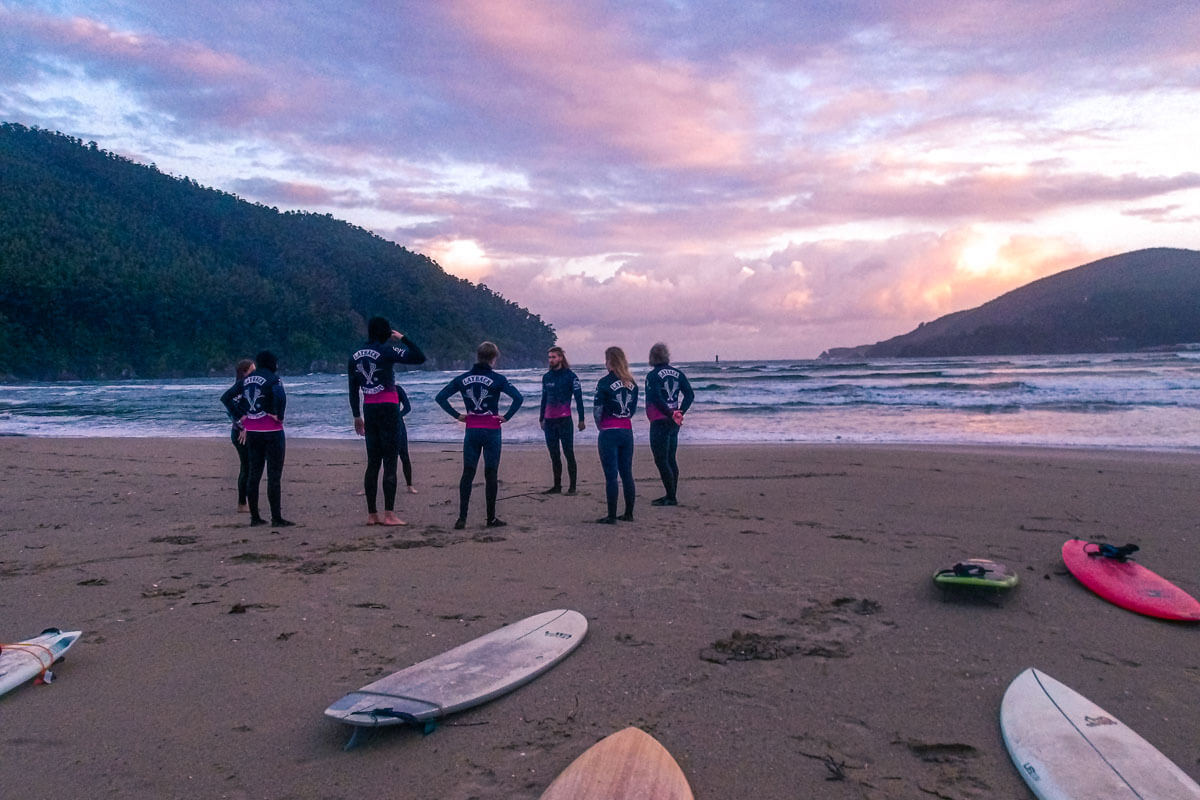
Conclusion: Pack Realistically, Surf Better
Galicia doesn’t require exotic equipment – but it does require realistic preparation.
Those who understand the climate, choose the right wetsuit and adapt to Atlantic conditions can focus on what really matters: extended water time, consistent swells and measurable progress in the water.
Intermediate surfers who value plenty of time in the sea, consistent conditions and a calm, surf-centred environment will often find more here than online descriptions initially suggest.
All images © Layback Surfcamp / Photography: Michelle Mattern